A maverick telecom engineer fed up with TV trash, takes an epic journey through the mass communications education system. From the first year at the Cronkite School to an MFA in New York City, and on to face-to-face encounters with media executives, he documents the tenets of deception that keep an incompetent cabal of self-worshipping, snotty little brats in control of a progressively suffering planet.
At the age of 41 I’d seen many mass media mistakes in reporting the news of the world. In the Gulf of Tonkin as a U. S. Navy jet-fighter maintenance shop foreman temporarily assigned as a napalm loader, I saw mass incineration of innocent people portrayed as “fighting for freedom.” In Bangladesh, I saw the manipulation of families by the elite to bear upwards of 12 illiterate children to slave away in fields portrayed as “poverty.” In Iran, I saw a ruthless dictator who executed dissidents portrayed as “an ally.” Later in that same nation after its population overthrew the dictator, I saw embassy employees taken as prisoners of war portrayed as “hostages.” And I’d seen the word “terrorist” bandied about to portray only a select few of the many depraved idiots who go to radically violent extremes to get their own way.
So after mixing all the moralistic juices infused into my system from military and Catholic high schools, along with rhetoric absorbed from folk heroes like Roy Rogers, Lassie and Bonzo, I embarked on a seven-year, $250,000 quest to set the records straight. Naïve enough to think mass media just didn’t  know, I enrolled in the Walter Cronkite School at Arizona State University.
In the first year, I attended Mass Communications 101 along with about 70 clean-faced, starry-eyed young folks hoping to become news anchors, sports casters, foreign correspondents or producers. But I quickly became the most unpopular person in class for asking – as the professor put it – the “tough questions:”
Wasn’t I myself participating in terrorist activity in the Gulf of Tonkin by killing masses of people to scare them into economic submission?
Didn’t those embassy employees in Iran sign contracts with the U. S. government acknowledging they could be taken prisoner of war? Isn’t calling them “hostages” a deliberate manipulation of truth? If a Muslim were arrested for refusing to honor a deportation order, would we call him a “hostage?”
Why are the 10,000 or more children who die of starvation every day not news? Is it because it exposes the true character of Globalized Market Capitalism?
Why should private interests have a right to dictate what should be public information?
I felt like I was at a sixth-grade basketball game and every time the ref called a foul against the other team he was a saint, but if he called one against us he was a prick. But one day the professor quietly pulled me aside and encouraged me to keep it up, even though I was frequently booed. The students needed the mental exercises. He’d thus gained my confidence, so when he told the class to beware of the

Does FAIR have a right to criticize news produced by private interests? Click logo to visit FAIR.
traitors in a group called “Fairness and Accuracy in Reporting” (FAIR), I believed him. They were crackpots not properly indoctrinated to criticize the news empire. If I noticed FAIR trying to infiltrate classes, I should report them to security. I’d keep my eyes peeled. After the course finished, he told me that the most common answer in the students’ evaluation under “What did you like least about the class?” was “Mr. Asmus.”
The half of us remaining at the start of the second year went on to learn the finer points of journalistic professionalism, never mind if printed or read by talking heads. We should strive to be “objective,” meaning we only told raw facts; the dreaded “subjective” meant showing a one-sided point of view. And we should tell all the facts, avoiding the dishonesty of “lies of omission.” We learned that if we ever made a mistake, we were ethically required to make an official correction. We learned to write basic critiques of books and movies, and how to include all the details in announcements. A dead person’s age always went at the end of the obituary. We also learned to write fast. Time is of the essence. Time… is money.
The third year was the proof of the pudding; we would actually have to produce something. Statistics told us that only three of the 15 left would ever find work. Our success would rest on our ability to follow the three main rules of professional journalism: make a profit, don’t get sued and don’t go to jail. Every production has three important elements: what is stated, what is implied and what is not stated. But every production needs a sponsor. So if no one wants to endorse our story, it’s worthless. Truth is an option, not a requirement. And to top it off, after taking this course we would never be able to watch a movie, a TV show, read a book, a magazine or a newspaper in the same way again. After we took this course… we’d be able to see inside.
The meat-and-potatoes of the fourth year was “Mass Communications Law,” a review of the Supreme Court cases that set the rules that lower courts should follow. We would learn about slander and libel, privacy and paparazzi, copying and copyrights and decency and decadence, all with footnotes on how they were argued and defined by landmark decisions. Although my classmates all said, “Ewww…,” I dove into it like ice-cold watermelon on the Fourth of July, not knowing that even though it counted on my GPA, it was for information only. No one I would meet in the next 20 years would have a clue or even give a shit. I personally found it quite interesting, but the “Ewwws” were more realistic.
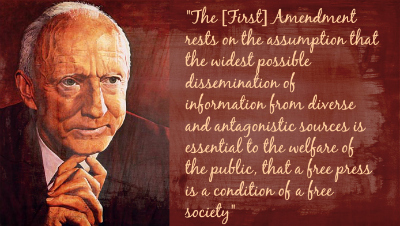
My final semester included a seminar of seven honor students who discussed the issues of the time, with an added irresistible perk: the opportunity to direct one question to the man himself, face-to-face: Walter Cronkite. He’d sneak on campus the day before his annual visit to host the class. My question was, “We’ve learned that television news is directed at a sixth-grade mentality. What is television news doing to raise that?”
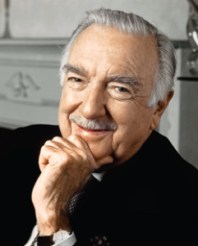
The honors seminar allowed one question directed to Walter Cronkite himself.
His answer was immediate and precise, “Nothing. It’s not our job; it’s the job of education.”
My retort was also immediate and precise. “I disagree. If you’re the only one in the lifeboat with arms, you row. You can’t say, ‘It’s not my job, I’m the chef.’ Television has the attention of the children, therefore it has the responsibility to intellectually nourish them, not to manipulate or patronize them.”
I’d seen Mr. Cronkite often on his newscasts, but he’d never appeared so perplexed. All he could say was, “That’s an interesting point,” while the other six smiley-faces looked knives at me. I’d gone outside the limits of nice news.
Shortly before graduation, I noticed an ad on the bulletin board seeking a producer to make commercials for the translator stations that relayed Phoenix TV channels to remote towns in Arizona. For its efforts, the translator company was allowed to sell one 30-second local spot on each of the six channels every hour, a great opportunity for small businesses. At the interview, I was surprised that not a single student from ASU has applied, and I couldn’t image why when the boss asked, “Don’t you have to make productions in your studies? A 30-second commercial should be a piece of cake.” I agreed it should.
She then showed me a national Chrysler commercial with a five-second ending showing the dealer in Lake Havasu City saying, “Come on down,” but with a bright orange face. She told me he was livid. To get the job, I had to go to Havasu to shoot him again, taking the guy who shot the orange as my assistant. To boost my chances, I read the instruction manual for her $10,000 Sony Electronic News Gathering camera while sitting on the pot to learn how to do a proper white balance. I re-shot the dealer beside a few of his cars under a canopy in the shade of the Arizona mid-afternoon sun. When the boss saw the finished product, she hired me as an independent producer using her equipment to make commercials for her clients, with the freedom to run the show however I wanted. She patted her ¾-inch professional VCR and said, “This is the judge. You hand me 30-second spots that the customers like and I can air, you keep the job. If they suck, you’re gone.” Sounded like fun.
After a year I’d written, directed and produced more than 150 commercials for various car dealers, furniture stores, restaurants, jewelry shops and the like. I’d also produced political commercials for candidates for city council, sheriff and fire chief. And I’d worked with media time salesmen who knew nothing of law and who constantly asked me to sidestep rules of copyright and ethics, never believing me when I told them, “No, I can’t take scenes from an NFL football game and use them in your sporting goods commercial,” and “No I can’t gut a live cat on camera to draw attention.” Never mind the names they’d call me.
But all-in-all, the process was quite enjoyable. And to top it off, a copy of my spot-reel got me a first round draft pick to the Television Production, Master of Fine Arts Degree Program at Brooklyn College of the City University of New York. The Big Apple would be on my plate with a paid fellowship.
 I joined 11 other students from around the world, all eager to start production on their thesis shows. A young man from Beijing would do a documentary on The Terracotta Army. A young Irishman would do one on the Irish Republican Army; one from Chile, a religious show; a young woman from Korea would do a comparison of natural medicine to pharmaceutical. I would do a comparison of the social devastation of alcoholism compared to illegal drug use. We had a professional studio and would take turns as crew for each other: operators for cameras one, two and three, the video switching and audio mixing consoles, the video recorders and the character generator to add letters to the screen. One was assigned as floor manager, one for lighting and two on standby to do whatever was necessary. To top it off, my academic advisor Prof. George Rodman had published a textbook showing compelling arguments for each side of most social arguments. I assessed him as the best professor Id ever met. But the program itself wasn’t connected to the gatekeepers, the folks who actually decide – out of the mountains of information and opinions available – what actually gets broadcast. Those decision makers all lived in a dark basement somewhere. But the fluffy folks were easier to find and surprisingly talkative.
In my first real media adventure, I asked my advisor if he thought the Partnership for a Drug Free America (PDFA) would endorse my first-proposed thesis-show about the most socially devastating drug in the nation, alcohol. He didn’t know, but his advice was top-notch, “Call ‘em up.”
So I looked in the now-obsolete, ten-pound, sit down “A-M” volume of the Manhattan phone book. I called the number listed and a cheery voice answered, “Partnership for a Drug Free America. How may I help you?” Answering machines hadn’t caught on yet.
I spoke equally as cheerily, “My name’s Richard Asmus and I’m looking for information for a Master’s Degree thesis at Brooklyn College.”

“This is your brain on drugs. Any questions?” PDFA Public Service Announcement, 1987.
“Are you from NORML?” demanded the suddenly not-so-cheery voice.
“From what?” I asked.
“NORML! The National Organization for Reduction of Marijuana Laws! If you’re from NORML, we absolutely refuse to have any discussions with you.”
“Oh… them,” I recalled. “I’ve heard of them, but I’m a master’s degree candidate at Brooklyn College. I’m only looking for thesis information.”
“Are you sure you’re not from NORML?” she snarled. “Because if you are, we refuse to have an interview with you!”
“Yes, I’m sure. I’m not with NORML.”
“Good, because if you were, we wouldn’t talk to you. So what do you want?”
I repeated my request and was connected to the media advisor. In our lengthy conversation, I discovered that PDFA had a Manhattan office with 27 employees (ka-ching! that’s pricey) and they sought free advertising on TV, radio, newspapers and magazines to get the message out that people shouldn’t use illegal drugs. They also got reduced rates from several production companies to put together their commercials. They were getting about a million dollars a day worth of free advertising (ka-ching, ka-ching, ka-ching). But in response to one of my most pointed questions, she pouted, “No. We’re not successful because there are still people out there using drugs.” So I made a proposal.
I’d produce a half-hour talk show promoting them and their mission. We’d have a round-table discussion including their selected representatives, media sales reps, the DEA, rehabilitation workers and recovering addicts. We’d focus on the need to continue getting the word out, urging the ad media to give them even more free time. The advisor loved the idea and invited me to her office for a visit. But then I shot myself in the foot… big time.
“I have one final question.”
“Um hmm,” she purred.
“We all know that the social devastation from alcohol supersedes all other drugs combined by a factor of ten.”
“Um hmm,” she purred again.
“So I’d like to include alcohol in the discussion. After all, it’s a drug too.”
Her answer was immediate and precise. “That would not be in our financial interest. We’re funded by the advertising agencies that carry the major liquor accounts.” Busted but a boo boo.
If I’d kept my mouth shut, I could’ve asked that question on tape. Before any talk show starts, all the participants sign contracts stating they know that anything they say can be broadcast. Hardly anyone ever reads the contracts, but many try to weasel out after they realize they’d spilled the beans. My screw-up cost me the interviews, but at least I knew the truth. The alcohol money was nicely filtered.
Reflecting back on my junior year at the Cronkite School, I put PDFA’s ads in the formula:
What’s said: Don’t do illegal drugs.
What’s implied: Drink booze instead.
What’s not said: Oh yeah, we get to say this for free.
What about informing the public about the true dangers of all drugs in our society? Sorry, social responsibility wasn’t in the equation.
Author’s note: The Partnership for a Drug-Free America has evolved into the Partnership for Drug-Free Kids. Visit its website at http://www.drugfree.org/ to see its substance abuse programs, history and partners.
My most successful effort in the program happened by accident. In one of our advanced assignments, we would have the studio for two hours to produce a 30-minute show live-to-tape. We had to have everything set up and ready with a minimum of 30 minutes left. Our set, our performers and our lighting system all had to be ready when we called “roll tape.” If we yelled, “Stop tape,” we’d have to roll back and start from the beginning. Pausing the tape was prohibited. We could do any subject we wanted and it didn’t have to be air-quality to pass. But if it could air as a complete show, we’d get a better grade. The important part was to prove our ability to produce a live, 30-minute continuous show. And after the director of the department finished announcing the assignment, we all retired to a local pub for a nightcap. My miracle appeared through the haze while playing darts.
The next morning I again addressed a ten-pound, sit-down phone book, only this time the pages were yellow. I found “darts.” The first three listings were sporting goods stores that carried them, but had no idea where they came from… China, maybe? The fourth was Dart Mart, Inc. Two brothers who were tired of investment banking had started their own business. Bingo! They had new, used and antique darts and paraphernalia from all over the world. Anything at all to buy or know about darts, they had it. So out of the mist came the name for my project, “Some Points on Darts.” They were quite interested in a 30-minute show and would be delighted to help me put it together. I went to their store for an interview.

My daughter Nicole was visiting me from Arizona when I went to the interview. When she saw the Empire State Building, she asked, “Is that the building the big monkey was on?”
They had a portable convention display with a dartboard that I could use for a set. They’d just signed a contract with the 1987 world champion dart player, Gerald Verrier, as an on-call spokesperson and would gladly fly him from Seattle to be on the show. I asked a pretty, young newscaster student to be the hostess. Because it was for public television, we couldn’t promote their business, but the display had their logo all over it, and they could wear shirts with their logo on the back.
The show started with an interview with Mr. Verrier including questions about the history of darts and how the game is played. Then he started a demonstration game. I set up the studio to have the champ on the left side of a split TV screen, shot with camera one, and a close up of the dart board on the right side shot through the telephoto lens on camera three. With his first dart, Gerald casually threw a triple 20. I told camera three to zoom into the board a little closer. He threw another triple 20. I zoomed in for an even closer close-up. He threw another triple 20… three triple 20s, live and on camera! Whoa! I got an “A” for the course and the show aired five times on Brooklyn UHF Channel 25. Too bad I couldn’t have done as well on my thesis.
The wind had gone out of my sails for a show on alcoholism, so I chose another under-reported topic. A man and wife psychology team had done an in-depth study into the welfare system and found that an incredible number of people who were born into the culture had no idea how to even start looking for work. So they founded America Works to train welfare recipients in simple tasks like filling out a job application form, using proper language in the workplace and wearing appropriate clothing. They placed temporary employees in Manhattan businesses at discount rates for 90 days, with the condition that to continue after the trial period, the employer must take them on full-time. After a year, the employers had wanted to keep 90% the temps. America Works then billed the State of New York for getting the people off welfare, but the state put a cap on them. There was a limited amount of money in their budget to get people off welfare. Huh? Don’t you save money when you get someone off welfare?
The NBC “Today” show had aired a short piece about America Works, and I wanted to get footage from it to use in my intro. I had no idea how to do that, so I again asked my glow-in-the-dark advisor who again uttered the same pearl of wisdom, “Call ‘em up.”
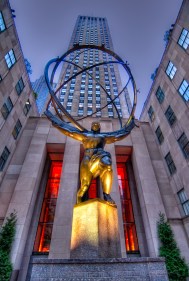
An exciting opportunity to go inside Rockefeller Plaza.
So now with the “N” to “Z” version of the ten-pound, sit-down phonebook on my lap, I found “NBC, 30 Rockefeller Plaza,” not even in bold type. After dialing, a bored and bland voice said, “N-B-Cee,” with descending intonation. I imagined she had two buttons, one marked “sane” and the other, “insane.” After I explained my plight, the voice said, “I’ll patch you through to the operator.” She pressed “sane.”
The next voice said, “N-B-Cee-ee,” with ascending intonation. After I again explained my plight, it said, “I’ll patch you through to news archives.”
“News archives,” said another cheery voice. I explained for a third time. “Do you know the date that the show aired?”
“Yes, I do.”
“Oh, good, we won’t have to charge you the $210-an-hour research fee to look it up. Just come on up, we’ll play the show and you tell us which seconds you want to buy.”
“How much does it cost?” It was around $50 a second, I don’t remember exactly. “Wow, that’s a lot. But my show is for public television, and it may help people get off welfare. Can you let me have it for free?”
“Just write a letter to my boss about your show and maybe he’ll let you use it.” She explained what details I should put on the letter plus a few extra tips: a signature from my faculty advisor would help, written on a Brooklyn College letterhead would help and informing him I’d put “Courtesy of NBC” across the bottom while it was playing would help. After a short and exciting visit to 30 Rockefeller Plaza, I returned with three full minutes of the “Today Show” recorded on the blank, ¾-inch professional video cassette I’d brought from the studio, along with a copy of the 17-page contract I’d signed. But even though I had some impressive research for my thesis show, it still sucked.

America Works finds jobs for people down on their luck.
I’d tried to illustrate that the couple had found a solution to a long-standing problem and the state of New York should pay them for as many people as they could, without a budget cap. The money they saved from not having to pay welfare for those people would more than cover it. The show featured a woman who had lost custody of her children because of drug use, but after finding work and self-respect through America Works, she’d been reunited with them. The show wasn’t very well constructed and the questions and answers didn’t nail the point. It barely passed the faculty review to earn my MFA, and only did so thanks to the pleading of my advisor. The show only aired one time to meet the requirements of the program, and nobody much gave a shit about it. America Works went on to become a significant employment agency in spite of my blunders. But because I’d finished my thesis early in the semester, I had plenty of time left to snoop around the Big Apple’s media empire while completing the rest of the courses and helping my classmates finish their thesis productions.
One of my classes required me to write a proposal for a show to illustrate my understanding of mass media finances. So I created a fictitious Golf Channel for cable to show tournaments, lessons, interviews with pros and historical events related to the favorite sport of the rich, 24 hours a day. The advertisers would include Rolex, Cadillac, Mercedes-Benz and perhaps even Rolls Royce. I got a “B” because the professor, a retired CBS executive, said it wouldn’t work. That was 1991. The Golf Channel appeared on cable in 1993. So it took two years for the impact of the lesson to hit me, “Did someone steal my idea?”
The answer is a resounding “No.” No one can copyright an idea. Even if the professor had immediately called one of his buddies and said, “What do you think of a golf channel?” he had every right to do so. I was in New York City. I had contacts, subway fare, legs, a voice and ears. I could have printed up business cards and started making calls. The only reason I’m not the creator of the Golf Channel is that I didn’t get off my ass and do it. I learned an incredibly important lesson: finding ideas is easy; making them work is not. No bones against big media here.
 My bones against big media started piling up with a different visit to 30 Rockefeller Plaza. One of my classes included two field trips to small speaking engagements with network executives. At the first, about 15 students showed up at the well-known New York City landmark, eager to listen to NBC’s Vice-President of Public Relations. As we entered the small classroom, mouths fell agape at the sight of the statuesque, Amazonic, Business-Barbie in a crisply tailored, navy-blue skirt-suit with a fluffy white neck thing held in place with a tiny red and gold brooch, and obviously coiffed by someone from Beverly Hills. Standing erect at a podium in the front, she spoke directly and confidently to sighing eyes above chins held up with elbows resting on desks. She talked of her childhood, her education, her first job and her rise through the ranks of NBC. Then she spoke of her duties and how difficult it was to keep the ratings up in such a challenging and changing world. All the females wanted to be her; all the males wanted to know her. At last came a Q and A session.
Most of the questions were small-talk or superficial inquiries about her life. Nothing seemed very earth-shaking until one peppy young woman asked, “What was your most embarrassing moment in your career at NBC?” That brought everyone to attention, and it didn’t take her long to start.
She told us that one time NBC had set up a Telethon type hotline to find missing children who had been abducted. They started the show with photographs of missing children around the nation, asking the audience to call if they had seen any. Soon the phones began to ring, and the scoreboard started to show children found, ready to be returned to their homes. At the end of the four-hour session, 87 children had been found. She explained that everyone at NBC thought it had been a great accomplishment.
But the next morning, a livid FBI called telling NBC it had started a national panic. An FBI agent asked her, “Do you know how many of your ‘recovered’ children had been ‘abducted’ by a natural parent who had lost the child in a custody battle?” Of course, she had no idea. “All of them!” replied the agent. They went on to tell her that abduction of children by strangers was very rare in the United States, and in the previous year there’d been a total of only six cases. But now mothers around the nation were calling law enforcement agencies, terrified that their children were in danger because of the high numbers claimed by NBC in its supposedly helpful program. And suddenly the monolithic VP stopped talking.
After a long pause, she broke the breathless silence with, “Well, that was my most embarrassing moment.” Then she smiled and looked out at the sea of frozen faces as if waiting for the next question.
The air remained perfectly still until the same peppy young woman asked her second question. “What did you do?”
Her answer was immediate, precise and cheery. “We didn’t do anything. We have a reputation to uphold.”

“We didn’t do anything. We have a reputation to uphold.
It was like she was an inflatable doll and someone had pulled her plug. “Ssssssss” went everything I’d thought about her. We’d all been specifically educated that responsible media people should stand in the
face of their mistakes and go to endless lengths to correct them. But here was a goddess of good telling us she can create a national panic and shrug it off to save face, thus exposing the immense gap between ethics and practice.
She continued, “Well, if there aren’t any more questions, I’d like to thank you all for coming,” then she clomp-clomped out in her perfect-height heels as if to go shopping on Fifth Avenue, apparently oblivious of what she’d admitted. I watched the solemn-faced students file out as if leaving a funeral.
The other executive in the program was the Vice President of Marketing at CBS. As we filed into the plush classroom, we noticed him sitting at a desk angled in the corner with his feet propped up and his hands behind his head. His business suit made him appear quite pudgy, with a balding head and tiny little eyes appearing somewhat red. As he waved his arm at the table in the opposite corner and spoke, it was obvious he’d been drinking. “Go ahead and fill your plates,” he slurred. “There’s plenty of stuff for sandwiches and there’s soft drinks and veggies with dip for the women. I wanted to put a bar instead, but the morons in PR told me it wouldn’t be appropriate for students. I think they’re full of crap, though, because I went to college myself and I know what it’s like, heh, heh, heh. Go ahead, don’t be shy. Take all you want.”
Starving students rarely pass up free food, so we made sandwiches with the fresh rolls and the variety of cold cuts and cheeses spread out lavishly on serving trays. Most of us also added some veggies and dip to our plates, even though we weren’t women, and picked a can of soda out of the ice in the cooler. We settled into the chairs at the tables facing him, ate and waited. After giving us a polite period to enjoy the food, he started.
He brought his feet down from the desk, rested his chin on fisted hands with elbows on the desk and scanned us with an evil grin. I imagined small, pointed teeth. After turning his head left and right a few times, he stared into the center of the room and said in a raspy voice, “Eyeballs!” We waited a bit as he scanned once more and repeated, “Eyeballs, heh, heh, heh. That’s what we call them. Eyeballs!” We waited for the punch line. “We count the eyeballs and we divide by two. That’s how we know how many people are watching; the more eyeballs, the more money we can charge for the ads. Of course there’s always that poor son-of-a-bitch out there with one eye, but there aren’t enough of them to matter, heh, heh, heh. We make our money on the eyeball count.”
He went on to explain the pricing parameters of ads on the network, and that his worst enemies were the censors who wouldn’t let him broadcast the things that would draw the largest audiences: blood, guts and porn. Most of us were already aware, as we’d studied these issues in-depth in other courses. The only insight we got into his actual job was when he explained his relationship with Coca Cola. “It isn’t like when they want to put an ad on the Super Bowl, they just call me up. We have an ongoing, permanent relationship and we go to parties, play golf, go to conventions and what not. By the time the Super Bowl comes around, we’d been negotiating the ads long before.” There wasn’t anything earth-shaking in his remaining discussion and I was pretty much glad when he finished. But he surprised us at the end by inviting the males to come up and talk to him. The females could leave.
About seven of us gathered around him as he opened his wallet and pulled out a credit card. “You know, we can all go out and have some drinks, and I can get you guys laid if you want, heh, heh, heh.” He held up the card and added, “I know plenty of high-class hookers who’ll take this, and the network pays the bill, heh, heh, heh.”
The other master’s candidates were in their early to late twenties and didn’t have much experience with this sort of thing. But I was 47 and had been pretty much around the world. So the students looked at me instead him. “Gee,” I told him, “Thank you for your offer but I think most of us have some studying to do. So we’d better be going.” Then I remembered my hobby of sorts and asked, “Could I have one of your business cards? I travel a lot and my daughter collects them.”

“What is she, a hooker, heh, heh, heh?”
As he reached in his wallet to pull one out he asked, “What is she, a hooker, heh, heh, heh?”
“No,” I said. “She’s nine years old.”
“Oh, heh, heh, heh,” was all he could manage.
I ended the encounter with, “Well, thanks for your presentation and the food, and good luck with the Super Bowl.” I shook his clammy hand and we left.
Another well-known personality helped expose media deception to an even more profound level: Saddam Hussein. I was on summer vacation in August of 1990 when mainstream media told everyone that this evil man had invaded poor little innocent Kuwait for no reason on all. So we should go kick his ass. But instead of making me salivate for war, it reminded me of my first bloody nose, when I went crying to my Mommy because a mean and evil kid had punched me for no reason at all. As she kissed away my tears and cleaned my face, she cooed, “And what did you do to him?”
“I didn’t do nothin’,” I insisted. “Nothin’ at all!”
She tilted her mommy-head slightly to one side, looking with her eyes raised to just under the lids and crooned, “Are you sure?” It turned out that I’d pissed in his ball cap. She didn’t care why; I could have stopped the argument but chose instead to make it worse. I got what I asked for.
After reading a few papers and watching the news about the Kuwait invasion, I guessed that the folks in Congress, the White House and the mainstream press weren’t fortunate enough to have a Mommy like mine. Or if they did, they’d probably cling to their lie. My suspicions were affirmed when I returned to my studies and discovered a contrasting and unreported sequence of the events in the Middle East.
At the start of the war the basic rant of the business community in New York City was, “This is the United States of America. When we have problems with the economy because of oil, we negotiate and we adjust. We don’t kill people. This war is nothing but a billion-dollar-a-day subsidy to the oil and defense industries.” But the ears of the gatekeepers were sealed shut by record-high ratings. Everyone was watching the war, so who gives a shit about the Truth when dollars are rolling in?
But many professors gave a shit. Journalism, political science, economics and foreign relations experts who’d been tracking the Middle East began holding emergency lectures to distribute the results of their studies. Saddam Hussein had wanted to improve the infrastructure of his nation, so he ended the war with Iran, totally against the will of Washington, big oil and the weapons industry. Daddy Bush threatened to break relations with Iraq, but Saddam told him to go have sex with himself. He would join the European Economic Union to align the dinar with the Euro instead of the dollar. Everyone in the world wanted the oil, and Iraq would have no trouble selling it. This would have cost family Bush billions. Daddy was fuming.
While the argument heated up, Saddam reviewed his relations with Kuwait. Disputes claimed Kuwait was stealing and price-fixing oil to deliberately destroy Iraq’s economy. Saddam was open to negotiations and ready to make sacrifices to his demands to avoid war. But the White House adamantly refused to negotiate, totally against the knowledge and will of the American people. So when Saddam threatened to invade Kuwait, an official message told him that the United States would not interfere with inter-Arab affairs. So he invaded. Gotcha! [1] (Click http://www.voltairenet.org/article162816.html for extensive details and references). The next day, every mainstream news outlet in the United States reported the invasion, but not a single one reported any valid reason or argument against the official story. “Saddam’s an ogre; end of story. Let’s go get him.” Obviously the White House and its cronies had the press nestled neatly in their pockets.

Tom Tomorrow offered a better story than the New York Times. Click comic strip to visit “This Modern World” by Tom Tomorrow.
I watched the war coverage in disgust as I continued my studies, but still had hope that my efforts could one day change things. As for finding work in the system, everyone said, “It’s not what you know, it’s who you know.” But they don’t say you can’t offer a handshake and introduce yourself. So I joined every professional organization I could; most had heavily discounted student memberships. The Museum of Television and Radio was looking for guest producers to make videos for their library. From their list of titles, I selected a documentary on TV commercials, searched their archives and found enough black and white, two-minute commercials from the 50s to make a show. Then I put a classified ad in Backstage Magazine’s “student productions” section to find two amateur actors who could offer light-hearted banter to liven up the show. The young woman lived in Manhattan near the Lincoln Center, so I took the Number 2 subway from Brooklyn for an interview with her. But when I got off the train, I couldn’t walk to her apartment. West 66th Street had a police blockade, even though it was full of people. I asked a cop what was going on.
He told me it was a demonstration of people with AIDS and they were cutting themselves and slinging blood into the crowd. Because the government wasn’t looking for a cure, they were trying to infect everyone. “You don’t want to go down there,” he warned. So I went a block south, crossed over a block and walked north to the other side of the demonstration and found out the cop had lied. It was a demonstration in front of ABC headquarters trying to drown out the news. They’d set up a flatbed trailer for a stage and had businesswomen dressed in cheerleader outfits, mocking the newscasters with the theme that the airhead anchors were “cheerleading an unjust and unnecessary war.” They were no hippies or bums, only men and women in the business community who knew the networks were shoveling out horse manure. But the NYPD was siding with the liars.

“Cheerleading an unjust and unnecessary war.
Seeing the scales tipped heavily against Truth in mass communications, I continued networking to find allies inside the system. A good friend who worked for the International Academy of Television Arts and Sciences started looking for interviews for me, and one day I invited her to lunch. For the posh Manhattan restaurant, I bought an elegant $250 sport coat with a credit card, far out of the range of my starving student budget. But I needed to let her know that I could fit in with the social element of the people I wished to set straight. As she told me she’d arranged interviews for me with CBS and the United Nations production team, my ornery side kicked in and I started to hit on her. But her smiles ignited my conscience and forced me to tell her I was in a troubled marriage in Arizona. Her ensuing advice even surpassed “Call ém up.”
With her precise British accent sweetly seeping through her adorable smile she said, “Richard, don’t do this. The people I’m talking to think you should have a chance… one chance. And to make it work, you’ll have to give 110%. If your heart’s in Arizona and your head’s here, you won’t be able to do it.” She paused and leaned forward. “Don’t go to the interviews, I’ll make excuses for you. Go back to Arizona and come back here either happily married or divorced. I’m not going anywhere. If you come back married, we’ll be friends. If you come back divorced, I’ll go out with you. Either way, we’ll continue with the interviews. But not now; you’re not ready.” After letting it sink in, I thanked her, paid the bill and then took the sport coat back for a refund.
It’s impossible to earn a Master’s Degree in anything and not learn something. Television production education hits heavily on marketing strategy and communications skills. So with the vision of my year-and-a-half old son and nine-year-old daughter pressing heavily on my economic prowess, not to mention student loans and an $85K credit card balance, I collected my ideas from both disciplines and founded Positive Technology, Inc., a consulting firm that implemented telecom projects wherever in the world necessary. I gave up my quest to broadcast Truth, knowing full well that there would never be a practical reason for me to ever turn on a TV set ever again in my life.
History tells us that lies from the top are nothing new in American culture. Dominican Monk Antonio Montesinos, in the very first Catholic Church in the newly found world said in his very first sermon, “As the voice of Jesus Christ in this isolated land, I tell you you’re all living in mortal sin. Look into the eyes of the indigenous people. Do you not see rational souls? Are you not obligated as Christians to love them as yourselves? By what right do you beat, enslave, torture and even kill them?” After he was booed and threatened by the Spanish noble snots, he concluded with, “A lie has many friends. The Truth has many enemies.” The year was 1521. English history leaves out events from 1492 and 1620 because the seed of Truth was planted firmly in the garden of genocide. Today we look down on that seed as “Hispanic.”
So why does our consumerist society today gobble up all the slop shoveled into our media feeding trough? Perhaps we don’t want Truth. Perhaps we like deception. Perhaps we need it to get through our day.
“Tell me you’ll love me forever,” she said as she unbuttoned her blouse.
[1] “Setting the U.S. Trap for Saddam Hussein (Part 2), The 1991 Gulf Massacre,” by Nafeez Mosaddeq Ahmed, http://www.voltairenet.org/article162816.html
2016 © Copyright The Other Third World


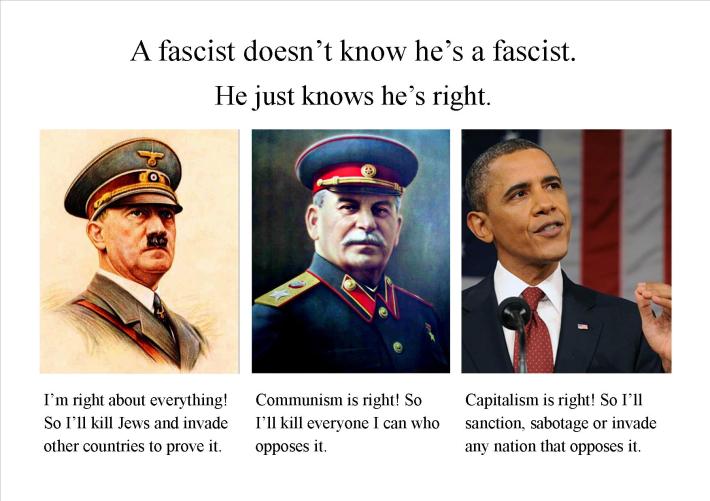
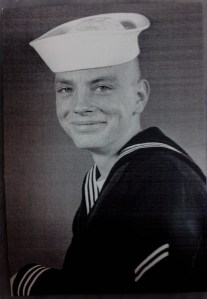 In 1961, a West Virginia high school graduate had four choices: go to college, work for Daddy, get a minimum wage job for life or join the military. College required either a high family income or a combined GPA and IQ slightly less than a genius. Working for Daddy required a family business. Anyone could get a minimum wage job, but advancing required fulfilling what was known as the “military obligation.” ROTC in university could cover it after graduating and spending four years as an officer in whatever service chosen. Volunteering for the draft would cover it as a dog-face with a three-year stint in the infantry. But a four-year enlistment in any branch of the service would include education in a trade that could morph into a useful civilian job. Because I’d had a desire to see every corner of the planet since I nine years old, a program to become a U. S. Navy aviation electronics technician was an offer I couldn’t refuse.




 The Other Third World